
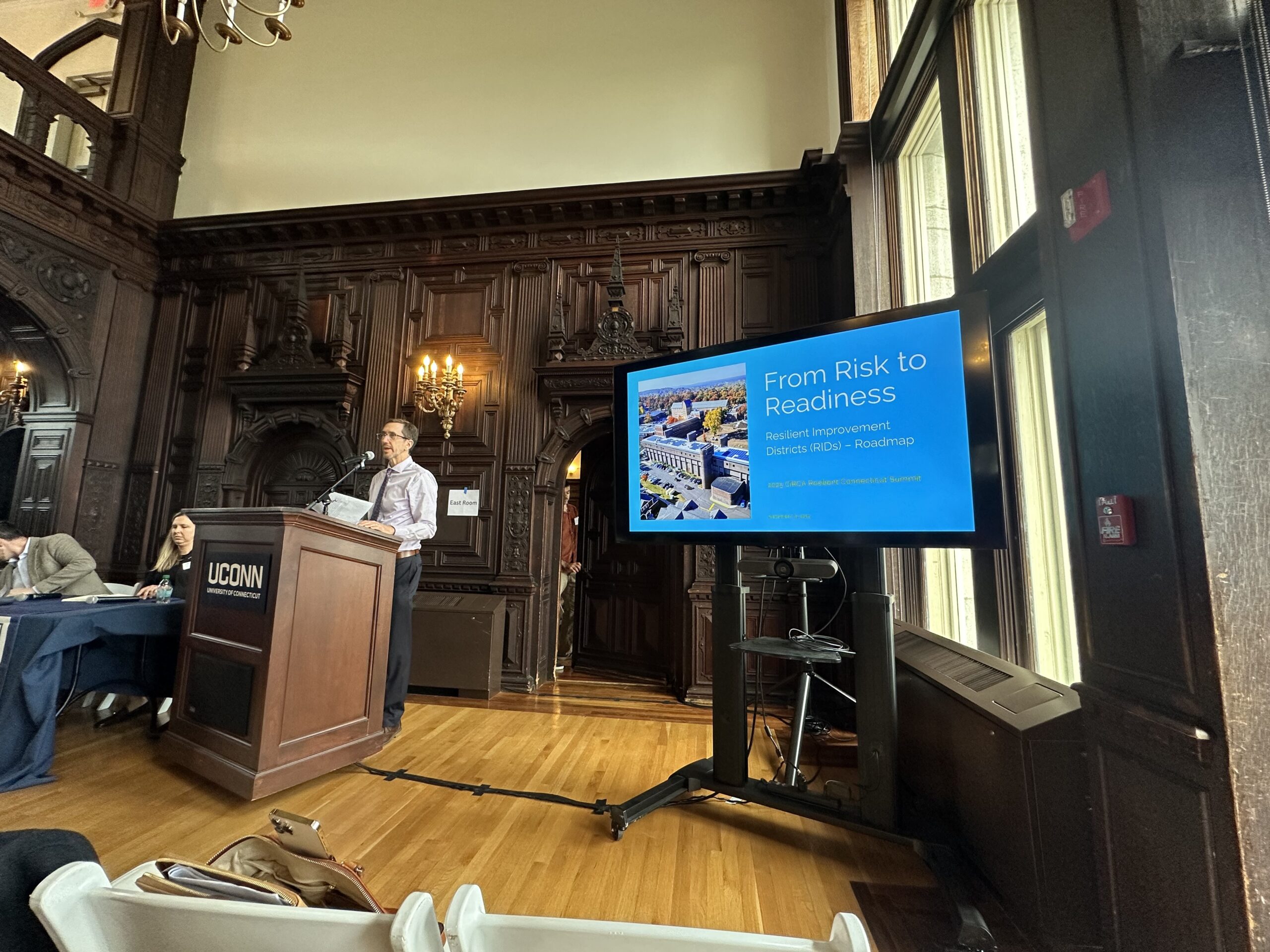
Climate-related disasters are increasing fiscal and economic risks for communities, while traditional financing and insurance tools are proving increasingly limited.
Challenge
Wildfires, flooding, and extreme heat are growing threats. Development pressures, bureaucratic hurdles, and misaligned economic incentives hinder innovation and limit effective adaptation.
Opportunity
Climate Resilience Districts offer a structured mechanism for sustained, scalable adaptation funding through tools such as tax-increment financing and resilience bonds.
These districts can align local government, businesses, residents, and insurers around investments that reduce community-scale risk.
The Incubator approach
California Forward and RCC launched the Resilience District Incubator to help communities explore and implement durable, community-driven resilience investment models.
Technical assistance
Hands-on support from early exploration through district development.
Peer learning
A national network connecting pilot communities to share strategies and challenges.
Expert guidance
Insights spanning insurance, finance, risk modeling, and community development.
Practical tools
Templates for feasibility, district development, and cross-sector partnerships.
Program details
What are Resilience Districts?
Authorized by California Senate Bill 852 in 2022, they enable public agencies to fund projects and the long-term operations needed to reduce local climate risks.
Who are the partners?
RCC is working with California Forward and the Connecticut Green Bank.
What is the timeline?
Launched in late 2025, the Incubator is planned to run through the end of 2027.
Who can participate?
The Incubator is exploring opportunities with communities in California, Connecticut, and New York.
Interested in learning more?
Connect with RCC to explore whether a Resilience District could work in your region.